🔥 $199 Boiler Tune-Up ⚡️ $89 Water Heater Flush Promotion
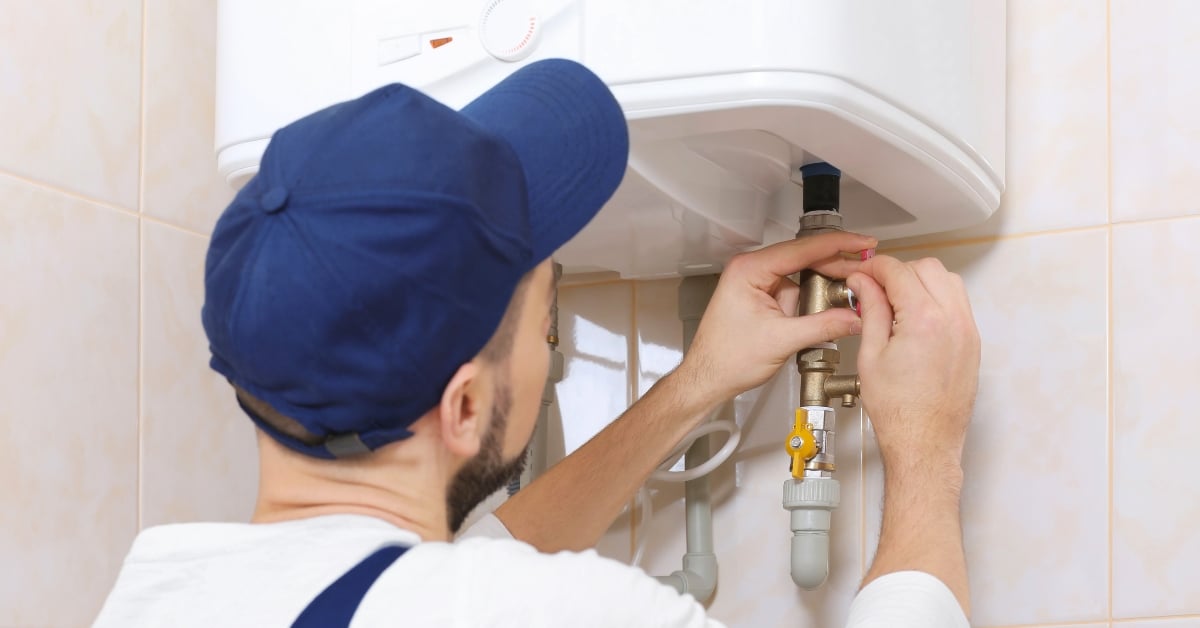
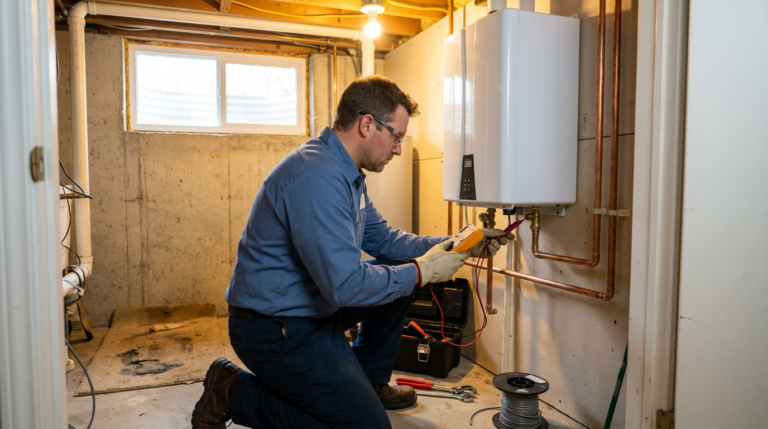
A silent boiler on a cold Utah morning is more than an inconvenience – it’s an urgent breakdown of your home’s most essential system. While a sudden failure brings daily life to a halt, boilers rarely fail without warning. Ignoring minor quirks can lead to costly water damage or serious safety hazards, such as carbon monoxide leaks.
By recognizing distress signals early, you can avoid the stress of a total system failure and a panicked emergency call. Here are five critical signs your boiler needs immediate, professional attention.
Quick Answer
- No Heat or Hot Water: This indicates a complete system shutdown that needs immediate diagnosis.
- Strange Noises: Banging, gurgling, or whistling sounds indicate internal issues such as limescale buildup or air in the system.
- Visible Leaks or Drips: Any water coming from the unit is abnormal and poses a risk of significant property damage.
- Unpleasant Smells: The smell of gas is a serious emergency, while burning or metallic odors suggest component failure.
- Constant Cycling or Pressure Loss: If your boiler frequently shuts off or needs its pressure reset, it has an underlying fault.
Table of Contents
- Your Boiler Isn’t Working: Understanding the Urgent Problem
- Sign 1: No Heat or Hot Water (Complete Boiler Failure)
- Sign 2: Strange Noises Coming from Your Boiler
- Sign 3: Visible Leaks and Water Dripping from Your Boiler
- Sign 4: Unpleasant Smells (Gas, Burning, or Metallic)
- Sign 5: Your Boiler Keeps Losing Pressure or Switching Off
- My Boiler is Not Working: When to Call a Professional Immediately
- Preventing Future Boiler Problems: Proactive Maintenance
- Frequently Asked Questions About a Boiler Not Working
Your Boiler Isn’t Working: Understanding the Urgent Problem
When a boiler fails, your home’s entire comfort system is compromised. As the core of your hydronic heating system, the boiler is responsible for everything from warming your floors with radiant heat to providing the hot water for your taps. Its failure isn’t just a mechanical issue; it’s a direct disruption to your life.
The Immediate Impact of a Failing Boiler on Your Home
A dead boiler means no more hot showers, no clean dishes, and a rapidly cooling home. During a frigid Salt Lake County winter, a non-functional boiler can cause indoor temperatures to plummet to unsafe levels within hours, posing a risk to your family and your home’s plumbing. The stress of the situation, combined with the fear of escalating repair costs, creates a significant burden for any homeowner. This is precisely the kind of emergency that requires a fast, reliable, and professional response.
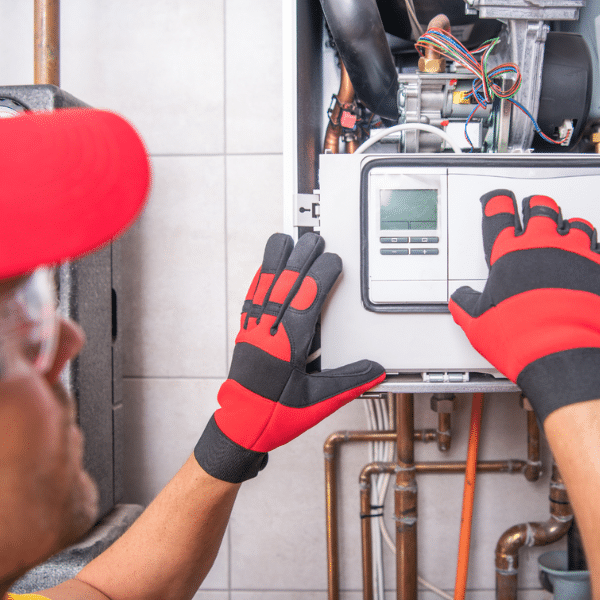
Sign 1: No Heat or Hot Water (Complete Boiler Failure)
The most obvious sign of a problem is a complete lack of function. If you’ve woken up to a cold house and cold taps, your boiler has likely experienced a “lockout” – a safety shutdown caused by a critical fault. While this is alarming, there are a few simple things you should check before assuming the worst.
What to Check Before Calling for Help (Safety First!)
Before you call for 24/7 emergency service, perform these quick, safe checks. They might resolve the issue or provide valuable information for our technicians.
- Check the Thermostat: Is it set to “heat” and at a temperature higher than the current room temperature? Sometimes a dead battery or incorrect setting is the culprit.
- Check the Power: Look at your home’s circuit breaker panel. Has the switch for the boiler tripped? If so, try resetting it once. If it trips again, do not touch it and call us immediately, as this indicates an electrical fault.
- Check the Pilot Light (Older Models): If you have an older boiler, check if the pilot light is out. Most manuals provide instructions for relighting it, but if you are unsure or smell gas, do not proceed.
Why this is a Critical Indicator for Professional Boiler Repair
If these simple checks don’t restore heat, your boiler has a more serious internal problem. It could be a failed pump, a faulty gas valve, an ignition failure, or a blocked sensor. Continuing to reset the system can cause further damage. This is the point where a certified technician is non-negotiable. As one of our customers, Kim Anderson, found when she had no heat, our team responds quickly, even on a Sunday, to get your system working again.
Sign 2: Strange Noises Coming from Your Boiler
Your boiler should operate with a gentle hum. Loud, unusual noises are a clear sign of mechanical stress or malfunction. Ignoring these sounds is like ignoring the check engine light on your car – it will only lead to a bigger breakdown.
Decoding Boiler Noises: Gurgling, Banging, and Whistling

Different sounds point to different problems. Our technicians are trained to diagnose issues based on what we hear.
- Whistling: A high-pitched whistle usually indicates low water pressure, a blockage in the system, or trapped air that needs to be released.
- Gurgling or Rumbling: This often means there’s air trapped in the system or, in more serious cases, a failing circulator pump.
- Banging or “Kettling”: This loud, alarming noise is frequently caused by limescale buildup on the boiler’s heat exchanger. This is common in Utah due to our hard water. The scale creates hot spots that cause water to flash into steam, creating a violent banging sound.
The Risks of Ignoring Unusual Boiler Sounds
Kettling drastically reduces your boiler’s efficiency and strains the heat exchanger, which can lead to cracks and leaks. Gurgling from a failing pump can cause the system to overheat and shut down. These are not noises that will go away on their own. They are mechanical warnings that something is actively failing. Our technicians can bleed the system, descale the heat exchanger, or replace a faulty pump to restore quiet, efficient operation.
Sign 3: Visible Leaks and Water Dripping from Your Boiler
A boiler should be a completely sealed system. Any sign of water – from a small drip to a steady puddle – is a serious red flag. Even a minor leak can cause pervasive damage to your home and indicate a critical failure within the boiler itself.
Identifying the Source and Severity of a Boiler Leak
Leaks can originate from several places, each indicating a different problem. You might see water dripping from pressure relief valves, pump seals, or corroded pipe joints. While a drip from a valve might seem small, it often points to dangerously high pressure inside the boiler. Corrosion on pipes or the boiler tank itself signals the end of that component’s life. Don’t underestimate any leak.
Potential Damage from a Leaking Boiler to Your Home
Water from a leak will seep into flooring, subflooring, and drywall, leading to rot, structural damage, and mold growth that poses a health risk. In our experience, homeowners often discover the full extent of the damage far too late. We use advanced diagnostic tools like pipe inspection cameras to trace the source of the leak without guesswork, ensuring we fix the problem accurately and prevent further property damage. If you see any water, it’s time to schedule a professional leak repair service.
Sign 4: Unpleasant Smells (Gas, Burning, or Metallic)
Your sense of smell is one of the most effective safety tools you have boiler maintenance. Certain odors are immediate and severe warnings that require instant action.
What Different Boiler Smells Can Indicate
Never ignore an unusual smell coming from your boiler room.
- Gas Smell (like rotten eggs): This is the most dangerous sign. It indicates a potential gas leak.
- Burning or Dusty Smell: This can occur when a boiler kicks on for the first time in a season as it burns off dust. However, if the smell lingers or smells like burning plastic or wiring, it points to an electrical fault.
- Metallic or Oily Smell: This may suggest a component is overheating or there is a leak in the system, possibly from the heat exchanger.
Immediate Safety Actions if You Smell Gas
A gas smell is an emergency. Do not pass go. Do not try to find the source yourself.
- DO NOT operate any electrical switches, unplug anything, or use your phone inside the house. A spark could cause an ignition.
- EVACUATE everyone from the property immediately. Leave the door open on your way out.
- CALL your gas company’s emergency line (e.g., Dominion Energy in Utah) from a safe distance, then call our 24/7 emergency line.
Sign 5: Your Boiler Keeps Losing Pressure or Switching Off
A boiler that constantly needs your attention has a problem. Frequent resets and pressure adjustments are not normal operating procedure; they are symptoms of an underlying fault that is compromising the system’s stability and safety.
Understanding Boiler Pressure Fluctuations
Most residential boilers are designed to operate within a pressure range of 1.0 to 1.5 bar. The pressure gauge on your boiler should remain steady in this green zone. If you find it has dropped into the red, it means there’s a leak somewhere in the system or a faulty pressure relief valve. While topping up the pressure may provide a temporary fix, the pressure will continue to drop until the root cause is addressed.
Frequent Boiler Resets: A Warning Sign
A boiler that needs to be reset frequently is in a state of “lockout.” This safety feature engages when the boiler’s internal sensors detect a fault, such as low pressure, an ignition failure, or an overheating component. Ignoring this pattern and simply continuing to push the reset button is dangerous. You are overriding a critical safety mechanism without fixing the problem it detected. This repeated stress can cause permanent damage to sensitive internal components.
My Boiler is Not Working: When to Call a Professional Immediately
When your boiler shows any of these five critical signs, the temptation to attempt a DIY fix can be strong. However, modern boiler systems are complex machines that combine water, high-pressure gas, and high-voltage electricity. This is not the place for guesswork.
Why DIY Repairs Are Not Recommended for Complex Boiler Issues
Attempting to repair a boiler without proper training is incredibly risky. You could inadvertently create a gas leak, cause an electrical short, or void your manufacturer’s warranty. Many homeowners we’ve helped tried a “quick fix” found online, only to cause a much more expensive problem. As one of our customers, Kyrian Nielsen, noted, we are “incredibly helpful and showed us each step throughout the process so that we felt comfortable and informed” – a level of safety and clarity you cannot get from a tutorial video.
The Importance of Certified Boiler Technicians
A licensed and certified hydronics expert from Glacier Plumbing and Hydronics has the training, tools, and experience to diagnose the problem safely and accurately. We understand how the entire system works, from the boiler itself to the radiant tubing in your floor. Our dual expertise in both plumbing and hydronics means we can solve the whole problem, not just one part of it. This ensures a complete, lasting repair that gives you peace of mind.
Preventing Future Boiler Problems: Proactive Maintenance
The best way to deal with a boiler failure is to prevent it from ever happening. Just like your car, your boiler requires regular professional service to run efficiently and reliably throughout its lifespan, which the U.S. Department of Energy recommends to ensure optimal performance. Annual maintenance catches small issues before they become catastrophic failures.
Pro Tip: An annual tune-up can improve your boiler’s efficiency by up to 10%, saving you money on your monthly energy bills and extending the life of your unit.
An annual tune-up by our team includes cleaning the heat exchanger, checking electrical connections, testing safety controls, and verifying system pressure. This proactive service is your best defense against unexpected breakdowns. We currently offer a complete $199 Boiler Tune-Up to get your system ready for the seasons ahead. Consider it a small investment in your home’s reliability and your family’s comfort. You can also explore our plumbing maintenance memberships for ongoing protection.
Considering a New Boiler? When Repair Isn’t Enough
If your boiler is over 15 years old, requires frequent and costly repairs, or is highly inefficient, it may be time to consider a replacement. Investing in a modern, high-efficiency boiler can significantly lower your energy bills and provide more reliable heating. Our team can help you assess whether a repair or a full boiler installation is the most cost-effective solution for your home.
Frequently Asked Questions About a Boiler Not Working
The Bottom Line
- A boiler that makes strange noises, leaks, smells bad, or frequently shuts down is not just an annoyance – it’s a critical warning.
- Ignoring these signs risks not only a complete loss of heat but also severe water damage and serious safety hazards.
- Simple checks like your thermostat and breaker are fine, but anything beyond that requires a certified professional.
- Proactive maintenance is the single most effective way to prevent costly and stressful emergency breakdowns.
Your boiler is the heart of your home’s comfort, and keeping it healthy is essential. Listen to what it’s telling you.
Get Your Boiler Fixed Right, The First Time
A non-functional boiler can turn your comfortable home into a cold, stressful environment. You need a team that understands the urgency and has the specialized expertise to solve the problem fast. At Glacier Plumbing and Hydronics, we are not just plumbers; we are licensed hydronic heating specialists serving the greater Salt Lake City area. Our dual expertise means we can diagnose and repair your entire heating system correctly. From using advanced tools to find the real problem to ensuring a no-mess, stress-free service, we are committed to restoring your peace of mind. Our team is on standby 24/7 because we know boiler emergencies don’t wait for business hours. Don’t wait for a small issue to become a major crisis. If your boiler shows any of these warning signs, contact the local experts at Glacier Plumbing and Hydronics today for a fast, reliable diagnosis.
Related Reads:
- Salt Lake Emergency Plumber | Fast Help Anytime, Day or Night
- Radiant Floor Heating for Utah Homes? | Radiant Heating FAQ
- Boiler Installation in Utah
- Tank vs Tankless Water Heaters in Utah: Which Is Best?
We are a locally owned and operated plumbing and boiler service company, dedicated to providing honest service at a fair price. We are licensed, insured, and always maintain current training and expertise in plumbing and radiant heating. To insure all of your homes needs are met. Servicing residential and commercial properties.
Latest posts by Glacier Plumbing & Hydronics (see all)
- Best Tankless Water Heater Repair Options: Reviews & Recommendations - September 1, 2026
- Water Heater Repair FAQ: Common Questions Answered - September 1, 2026
- The Ultimate Guide to Water Heater Installation: What You Need to Know - June 23, 2026