🔥 $199 Boiler Tune-Up ⚡️ $89 Water Heater Flush Promotion
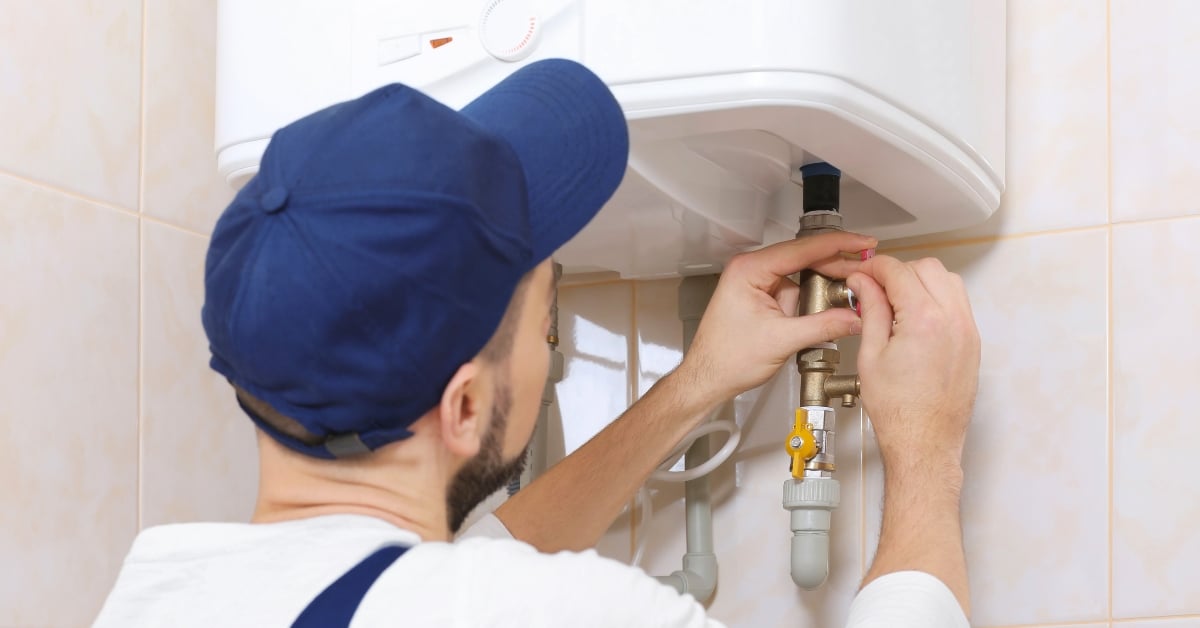
If your tankless water heater suddenly quit or started acting up, it can feel like the whole house is on pause. No hot showers, dishes piling up, family frustrated.
The good news is that in many cases, a tankless water heater absolutely can be repaired instead of replaced. The key is knowing what kind of problem you are dealing with, how old the system is, and having a qualified technician diagnose it correctly.
If you live along the Wasatch Front and your tankless system is giving you trouble, you are not alone. At Glacier Plumbing & Hydronics, we work on tankless water heaters every week across Salt Lake, Davis, Weber, Summit, and Utah counties, and we see the same patterns again and again.
Before you assume you need a brand new system, let’s walk through when repair makes sense, when replacement is smarter, and what actually happens during a professional repair visit.
What We’ll Cover
- How tankless water heaters work and why they fail
- The most common problems that can be repaired
- How to tell if repair or replacement is the better move
- Why professional service is safer than DIY
- What to expect when we come to your home for a repair
How Tankless Water Heaters Work And Why They Fail
Tankless water heaters work very differently from traditional storage tanks. Instead of keeping a large tank of water hot all day, they heat water on demand as it flows through the unit. That is great for efficiency, but it also means there are more sensitive components working hard every time you turn on a hot water tap.
Common Components In A Tankless System
Most modern tankless water heaters, whether gas or electric, include:
- Heat exchanger that transfers heat to the water
- Gas burner or electric heating elements that provide the actual heat
- Flow sensor that tells the unit when water is moving
- Temperature sensors and safety sensors to prevent overheating
- Control board (the “brain”) that coordinates everything
- Ignition system and gas valve (for gas units)
- Venting system to safely remove exhaust gases
When something goes wrong, it is usually a specific component, not the whole system, that has failed. That is why many tankless problems can be repaired with the right parts and proper diagnostics.
If you want a deeper look at our broader hot water services, you can see how tankless fits into our full water heater services in Utah.
Typical Wear And Tear Issues Over Time
Tankless water heaters are designed to last a long time, often 15 to 20 years when maintained correctly. But along the Wasatch Front, our hard water and cold winters are hard on equipment.
Over time, we often see:
- Mineral scale buildup on the heat exchanger from hard water
- Clogged inlet filters that restrict water flow
- Failed sensors that start sending bad data
- Control boards that start to malfunction with age or power surges
- Corrosion on fittings or internal joints
Almost all of these issues can be repaired, especially if the unit is not too old. Regular professional maintenance, like flushing and descaling, goes a long way toward preventing early failure. Our boiler and heater maintenance membership options follow that same principle: take care of the system and it will take care of you.
Most Common Tankless Water Heater Problems That Can Be Repaired
So, can a tankless water heater be repaired in real life, not just in theory? In many cases, yes. Here are the problems we see most often that are good candidates for repair.
No Hot Water Or Inconsistent Temperature
If you are getting no hot water at all, or the temperature swings from hot to cold, it is frustrating and can feel like a total failure. In reality, several repairable issues might be behind it:
- Clogged inlet filter or scale buildup limiting water flow
- Faulty flow sensor that does not detect demand
- Failed temperature sensor sending the wrong signal
- Undersized unit that struggles during high demand periods
Inconsistent temperature can also show up in homes where additional fixtures were added after the tankless unit was installed. A trained tech can determine if you are dealing with a repairable component failure or a sizing issue that points toward replacement.
If your problem is more of a traditional tank-style system, we have a full guide on who to call when your water heater is not working that walks through next steps for Utah homeowners.
Error Codes And System Lockouts
Modern tankless water heaters are smart enough to protect themselves. When a serious issue is detected, the unit will often:
- Flash a specific error code
- Shut down or “lock out” until the fault is cleared
Those codes can point to problems like:
- Ignition failures
- Venting issues
- Gas pressure problems
- Overheating events
Manufacturers provide code charts, but reading a code and actually fixing the underlying issue are two very different things. Gas, combustion, and venting problems are not something we want homeowners guessing on. Our licensed technicians use diagnostic tools, manufacturer specs, and real-world experience to clear errors safely and restore operation.
For emergency situations where you suddenly have no hot water, our emergency plumbing services in Utah are available 24/7.
Strange Noises, Odors, Or Leaks
Unusual sounds or smells coming from your tankless unit should never be ignored.
Common repairable issues include:
- Rumbling or whistling from scale buildup or restricted flow
- Burning smells from overheating components
- Small leaks at fittings, valves, or internal seals
In some cases, a deep cleaning, descaling, or a few replacement parts will solve the problem. In others, noises and odors are early warning signs of a more serious failure in the heat exchanger or burner assembly.
If you ever notice a gas smell near the unit, leave the area and call for help immediately. That is a situation where professional response is not optional.
For systems paired with high efficiency heating solutions, you might also be interested in our guide on radiant floor heating for Utah homes and how hot water production ties into whole-home comfort.

When Repair Is Possible Versus When Replacement Makes More Sense
Not every tankless water heater should be repaired. Sometimes putting more money into an old or badly damaged unit is like putting new tires on a car with a failing engine.
Here is how we help homeowners decide.
Age And Condition Of The Tankless Unit
Age is one of the first questions we ask.
- Under 8 to 10 years old and otherwise in good shape: repair is often a smart choice.
- Around 12 to 15 years or more with a history of issues: replacement may make more sense.
We also look at the overall condition. If the heat exchanger is heavily scaled or corroded, or if the unit was installed incorrectly, repeated repairs might not be in your best interest.
Our team installs and services a wide range of tankless models as part of our tankless water heater services in Utah, so we have a good sense of how different brands age in our climate.
Cost Of Parts And Labor Compared To New Equipment
Once we diagnose the problem, we give you straightforward pricing for the repair. Then we compare that with the cost of a new, properly sized tankless unit.
As a general rule:
- If the repair is a small fraction of replacement cost, repair usually wins.
- If the repair cost climbs to 30 to 40 percent or more of a new system, we talk honestly about whether replacement will save you money and headaches in the long run.
We also factor in available specials and current coupons, so you can see the full picture before deciding.
Safety, Efficiency, And Warranty Considerations
Safety always comes first. If we see anything that concerns us with gas, venting, or combustion, we will be upfront about it.
We also consider:
- Energy efficiency: Newer tankless models are often more efficient than older ones.
- Warranty status: If your unit is still under manufacturer warranty, repair is frequently the better move.
- Home plans: If you are remodeling or adding bathrooms soon, we might recommend timing replacement with those upgrades.
If the unit is unsafe, out of warranty, and very inefficient, replacement becomes easier to justify. In those cases, we can walk you through your options and provide a clear quote along with our water heater installation services in Utah if you choose to upgrade.
Why Professional Tankless Water Heater Repair Is Safer And More Reliable Than DIY
Tankless water heaters combine gas, high BTU output, electronics, and pressurized water in a compact cabinet. That is not a great recipe for trial and error repairs.
Risks Of DIY Tankless Repair For Gas, Electric, And Venting
We understand the temptation to search for a video and start taking covers off. The problem is that mistakes with tankless systems can have real consequences.
DIY repairs risk:
- Gas leaks from disturbed connections
- Carbon monoxide issues from improper venting or burner adjustments
- Electrical hazards from exposed wiring and control boards
- Voided warranties when non-authorized work is performed
- Hidden damage if symptoms are treated but root causes are missed
Even something as simple as flushing a tankless water heater can cause issues if valves are handled incorrectly or the wrong cleaning methods are used.
Our licensed and insured plumbers handle these systems daily across the Salt Lake Valley and along the Wasatch Front. That experience shows in the speed, safety, and quality of the repair.
How Trained Technicians Diagnose Tankless Issues Correctly
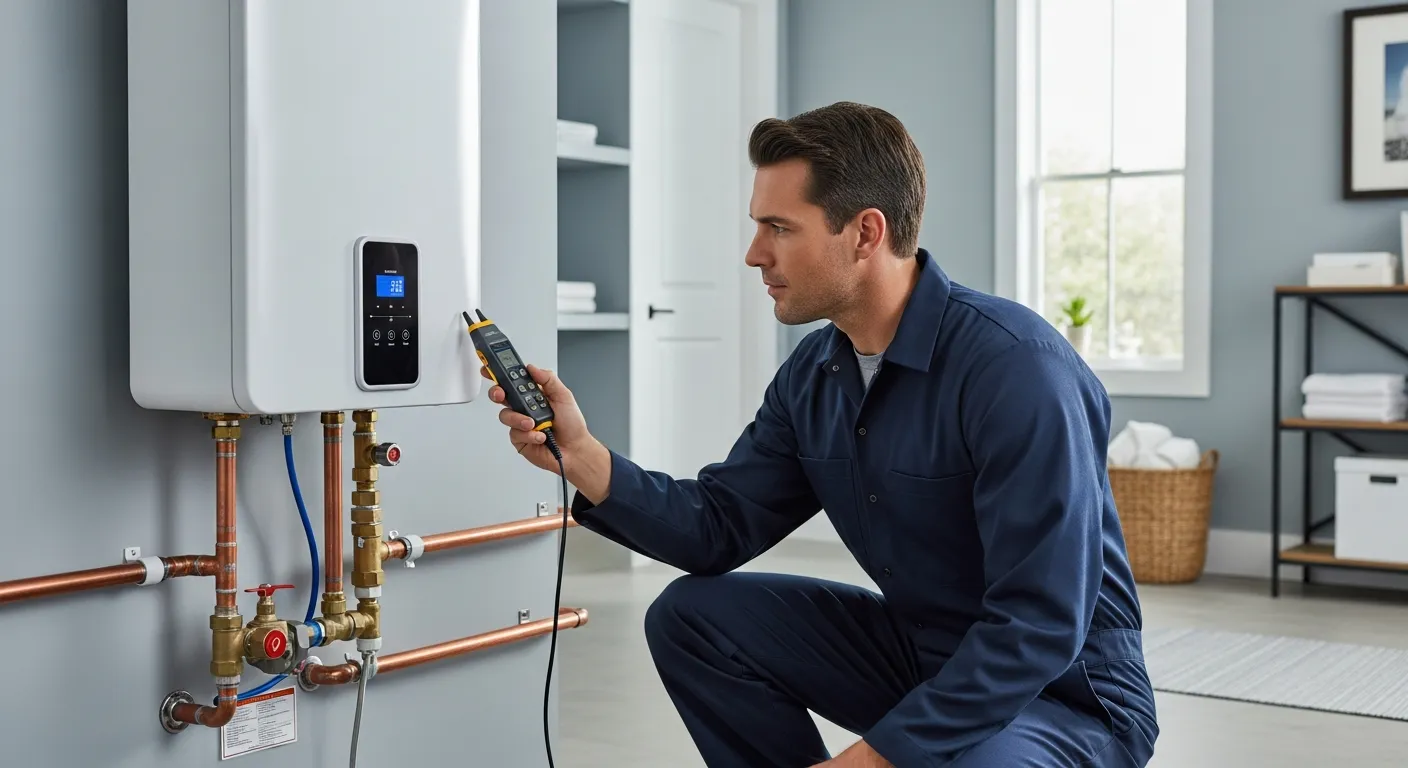
Professional diagnosis is about more than clearing an error code. When we arrive for a tankless repair, we bring:
- Manufacturer specifications and service manuals
- Specialized tools to measure gas pressure, combustion quality, and electrical values
- Experience with local water conditions and common failures in Utah homes
Rather than guessing, we:
- Listen to your description of the problem.
- Reproduce the issue if possible.
- Test components systematically.
- Confirm the root cause before installing parts.
That approach helps avoid the frustrating cycle of “replace one part, hope it works, replace another part, hope again.“ It also protects your investment and your safety.
If you are ever unsure whether a problem counts as urgent, our guide on what is considered a plumbing emergency can help you decide when to call right away.
What To Expect During A Professional Tankless Repair Visit
Knowing what will happen when a plumber arrives can take a lot of stress out of the situation. Here is how a typical tankless water heater repair visit goes with our team.
Inspection, Testing, And Accurate Troubleshooting
We start with a visual inspection of the unit, venting, gas or electrical connections, and surrounding area. Then we:
- Check for error codes and system history
- Test water flow, temperature, and ignition sequence
- Measure gas pressure or electrical readings as needed
From there, we narrow down the cause. Our goal is to identify the problem accurately the first time, not throw random parts at the system.
For homes with broader hot water issues, we may also evaluate fixtures and piping as part of our wider plumbing repair services in Utah.
Cleaning, Flushing, And Part Replacement
Once we know what is wrong, we review options with you and get your approval.
A repair visit might include:
- Full descaling and flushing to remove mineral buildup
- Filter cleaning or replacement
- New sensors, valves, or ignition components
- Tightening or replacing fittings to address small leaks
We use quality parts and follow manufacturer procedures so your unit performs as it should and any remaining warranty coverage is protected.
If during the visit we discover that replacement is clearly the better move, we will explain why and provide fair pricing through our water heater replacement services in Utah.
Preventive Maintenance To Help Avoid Future Breakdowns
A tankless repair visit is also a great time to talk about preventing repeat problems.
Depending on your water quality and usage, we may recommend:
- Scheduled flushing and descaling
- Checking and adjusting water temperature settings
- Adding or servicing a water softener to reduce scale buildup
We often compare it to staying ahead of boiler issues. Just like regular service can help you avoid the situations described in 5 signs your boiler needs service before winter, proactive care keeps a tankless system running efficiently and reliably.
If you are curious about other ways we protect Utah homes from cold-weather problems, our guide on preventing frozen pipes in Utah winters is another helpful resource.

Schedule Professional Tankless Water Heater Repair Today
So, can a tankless water heater be repaired? In many Utah homes, yes. As long as the unit is in reasonable condition and the damage is not catastrophic, a skilled technician can often bring it back to reliable service with the right parts, cleaning, and adjustments.
The bigger question is whether repair or replacement is the smarter long-term choice for your home, your family, and your budget. That is where we come in. At Glacier Plumbing & Hydronics, we look at the whole picture: age, condition, safety, efficiency, and your plans for the home.
If you are in Salt Lake County, Davis County, Weber County, Summit County, or Utah County and your tankless system is acting up, we are ready to help. You can explore our full tankless water heater services, see why local homeowners trust us on our about page, or head straight to our contact page to request a visit.
If you are comparing options or planning ahead, our main services hub and blog are good next steps to learn more about heating and plumbing solutions that fit Utah homes.
Related reads:
- How much is an emergency plumber visit in Utah
- How much does it cost to fix a water softener
- Why choose Glacier Plumbing & Hydronics
- Frequently asked questions
- Service area in Salt Lake County
Key Takeaways
- In many cases, a tankless water heater can be repaired because most issues stem from individual components like sensors, filters, or control boards rather than total system failure.
- Common repairable problems include no hot water, fluctuating temperatures, error codes, system lockouts, strange noises, odors, and small leaks caused by scale buildup or worn parts.
- Deciding between tankless water heater repair and replacement depends on the unit’s age, overall condition, safety, efficiency, and whether the repair cost approaches 30–40% of a new system.
- Professional service is strongly recommended over DIY because tankless systems involve gas, combustion, venting, electricity, and pressurized water, all of which carry serious safety and warranty risks if handled incorrectly.
- During a professional repair visit, technicians inspect and test the unit, clean and flush components, replace failed parts, and often recommend preventive maintenance like regular descaling or water softening to avoid future breakdowns.
Tankless Water Heater Repair FAQs
Can a tankless water heater be repaired, or does it always need to be replaced?
Yes, a tankless water heater can often be repaired. Many issues involve specific components – like sensors, filters, ignition parts, or scale buildup – rather than total system failure. A technician will assess age, condition, and repair cost versus replacement to decide what makes the most financial and long‑term sense.
What are the most common tankless water heater problems that can be repaired?
Common repairable tankless water heater problems include no hot water, fluctuating temperatures, clogged inlet filters, mineral scale on the heat exchanger, failed sensors, ignition issues, venting errors, and small leaks at fittings. A professional can flush, descale, replace faulty parts, and reset error codes to restore safe, reliable operation.
How do I know if tankless water heater repair or replacement is the better choice?
Consider the unit’s age, overall condition, and repair cost. Systems under about 8–10 years old in decent shape are usually worth repairing. If your tankless heater is 12–15+ years, has repeated failures, or repair costs approach 30–40% of a new unit, replacement may be smarter long term.
Is DIY tankless water heater repair safe for gas or electric units?
DIY tankless repairs are risky, especially with gas, venting, and electrical components. Mistakes can cause gas leaks, carbon monoxide issues, electrical shock, or voided warranties. Even basic flushing can go wrong if valves are misused. For safety and warranty protection, gas and major electrical work should be handled by licensed professionals.
How often should a tankless water heater be serviced to prevent repairs?
Most tankless water heaters should be professionally serviced about once a year, or more often in areas with hard water. Regular maintenance typically includes flushing and descaling, cleaning filters, checking sensors and gas pressure, inspecting venting, and verifying temperature settings to reduce breakdowns and extend system life.
We are a locally owned and operated plumbing and boiler service company, dedicated to providing honest service at a fair price. We are licensed, insured, and always maintain current training and expertise in plumbing and radiant heating. To insure all of your homes needs are met. Servicing residential and commercial properties.
Latest posts by Glacier Plumbing and Hydronics (see all)
- Can A Tankless Water Heater Be Repaired? - December 15, 2025
- Is Radiant Floor Heating Right for Your Utah Home? Pros, Cons & What to Know - April 15, 2025
- How to Prevent Frozen Pipes in Utah’s Harsh Winters - April 15, 2025