🔥 $199 Boiler Tune-Up ⚡️ $89 Water Heater Flush Promotion
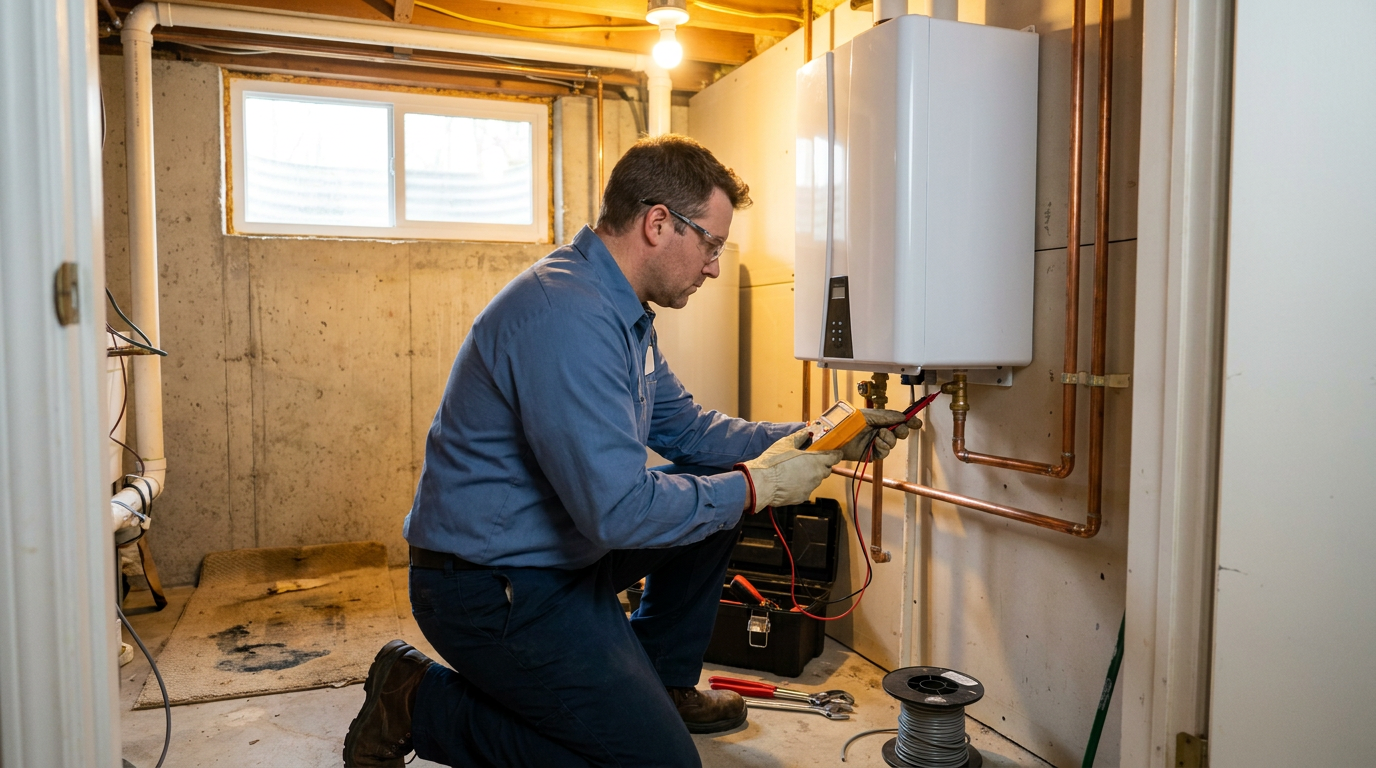
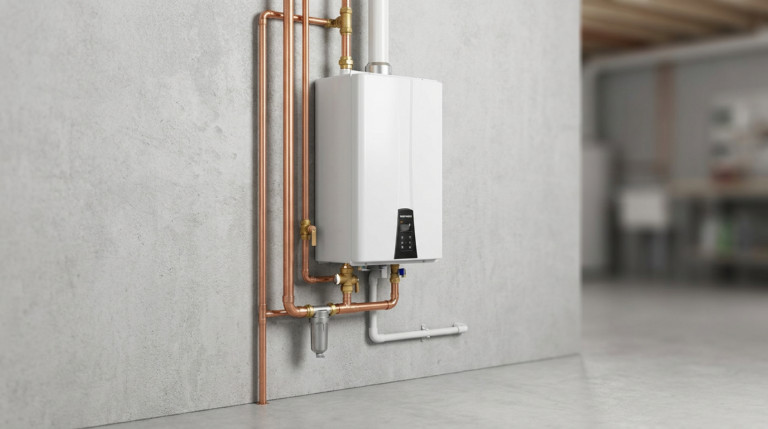
Tankless water heaters provide hot water on demand without storing dozens of gallons in a tank. However, these systems still require maintenance and can develop problems with mineral buildup, ignition, water flow, venting, sensors, and electronic controls.
The best tankless water heater repair depends on the cause. Flushing the system may restore performance when mineral scale is restricting water flow, while recurring error codes may require testing and replacing a specific component. In other cases, the problem may involve the gas supply, venting, electrical service, or original installation rather than the water heater itself.
This guide reviews the most common tankless water heater repair options and explains when repair or replacement offers better value.
Signs Your Tankless Water Heater Needs Repair
Tankless water heater problems are not always as obvious as a complete loss of hot water. Changes in temperature, pressure, or operating sound may be early signs that the system needs attention.
Schedule an inspection if you notice:
- No hot water
- Water that does not get hot enough
- Hot water that suddenly turns cold
- Fluctuating water temperatures
- Reduced hot-water pressure
- Recurring error codes
- Unusual clicking, humming, or rumbling
- The system repeatedly shutting down
- Delayed hot-water delivery
- Water leaking from or around the unit
- Unusual smells near a gas-powered system
- A sudden increase in energy use
Some symptoms have simple causes. Others may indicate a failing internal component or unsafe operating condition. A professional diagnosis is the safest way to determine what the system needs.
What Are the Best Tankless Water Heater Repair Options?
The best repair is the one that addresses the actual cause of the problem. Replacing parts without testing the system can increase costs without restoring dependable hot water.
Here are the most common professional repair options.
Professional System Diagnosis
Accurate diagnosis should come before any repair. Tankless water heaters rely on several connected systems, including water flow, gas or electricity, combustion, ventilation, sensors, and electronic controls.
A technician may inspect:
- Active and stored error codes
- Water pressure and flow
- Gas pressure and supply
- Electrical connections
- Ignition and combustion
- Air intake and exhaust venting
- Temperature sensors
- Flow sensors
- Heat-exchanger condition
- Inlet filters
- Condensate drainage
- Recirculation equipment
- Signs of internal leakage
An error code helps narrow down the problem, but it does not always identify the failed component. Testing is still necessary before parts are replaced.
Our recommendation
Begin with a complete diagnostic inspection, especially when the system repeatedly shuts down or displays the same error code after being reset.
Flushing and Descaling the System
Mineral buildup is one of the most common concerns for tankless water heaters in Utah. Hard water contains calcium and magnesium that can accumulate inside the heat exchanger.
Over time, this buildup may:
- Restrict water flow
- Reduce heating performance
- Create unusual operating noises
- Make temperatures inconsistent
- Increase stress on internal components
- Cause the system to shut down
- Shorten the equipment’s service life
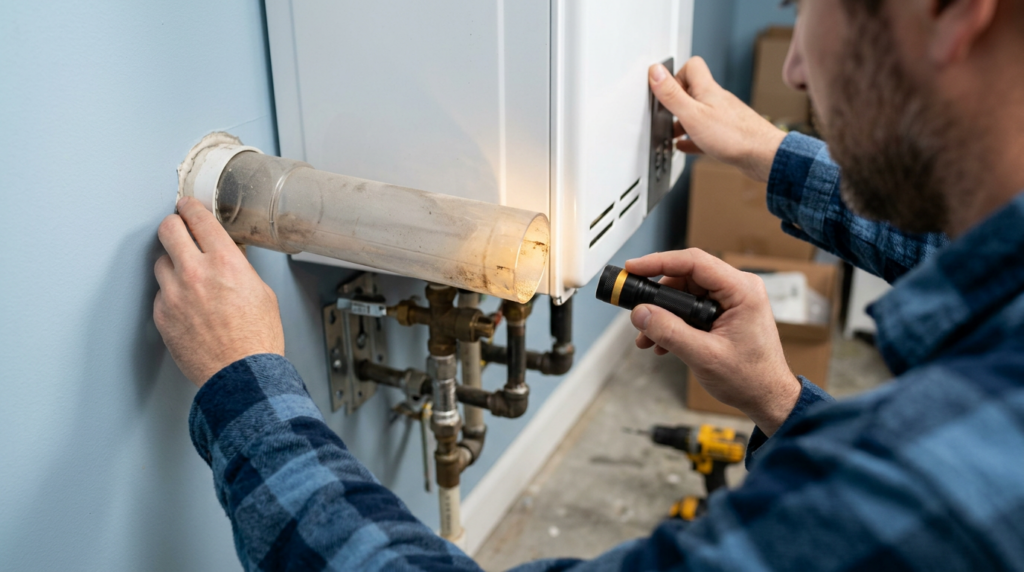
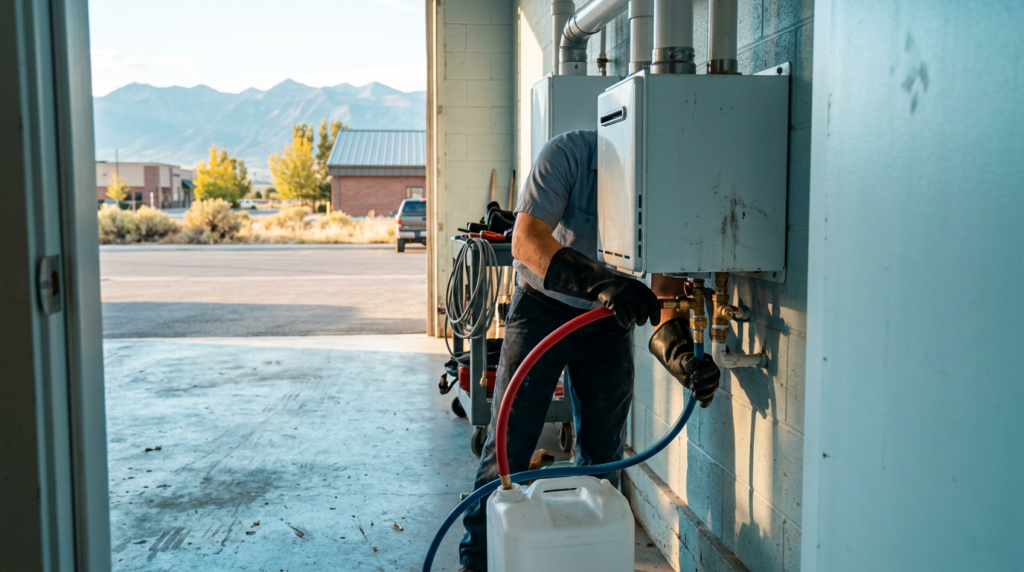
Professional flushing circulates a cleaning solution through the heat exchanger to remove mineral scale. The technician may also clean the inlet filter and inspect the system for additional problems.
Our recommendation
Consider professional flushing when the system has gradually lost performance or has not been maintained recently. Many Utah homes benefit from annual tankless water heater maintenance, although the right schedule depends on water hardness, usage, and manufacturer guidance.
Flushing will not repair a damaged sensor, circuit board, gas valve, or leaking heat exchanger. Inspect the system before assuming mineral buildup is the only problem.
Cleaning or Replacing the Water Inlet Filter
Tankless water heaters typically contain a filter that helps prevent debris from entering the system. A clogged filter can limit water flow and interfere with the unit’s ability to activate correctly.
Possible signs of restricted flow include:
- Low hot-water pressure
- Hot water cutting in and out
- The burner failing to activate
- Temperature fluctuations
- Flow-related error codes
A technician can clean the filter and check whether another plumbing restriction is affecting the system.
Our recommendation
Filter service can be a practical, lower-cost repair when restricted flow is the main problem. If the filter repeatedly becomes clogged, the plumbing system or water supply may need further evaluation.
Ignition and Burner Repair
Gas tankless water heaters must ignite correctly whenever you request hot water. If the burner cannot light or maintain a flame, the system may produce cold water or shut down with an error code.
Ignition problems can be caused by:
- A damaged igniter
- A dirty or malfunctioning flame sensor
- Insufficient gas pressure
- An interrupted gas supply
- Burner contamination
- Improper combustion
- Restricted air intake
- Blocked exhaust venting
- Wiring or control problems
Because several conditions can cause the same symptom, test the gas system and combustion process carefully.
Our recommendation
Do not repeatedly reset a system with an ignition or flame-failure code. Have the water heater inspected to determine whether the cause is inside the unit or elsewhere in the gas and venting system.
If you smell gas, leave the property and contact the appropriate emergency authority or gas provider from a safe location.
Sensor and Control Replacement
Tankless water heaters depend on sensors to monitor flow, temperature, flame, pressure, and exhaust conditions. When a sensor stops working correctly, the system may shut down to protect itself.
A failing sensor may cause:
- Incorrect temperature readings
- Intermittent hot water
- Frequent shutdowns
- Failure to activate
- Recurring error codes
- Water that becomes too hot or remains lukewarm
Control-board failures can produce similar symptoms. A technician should test the connected components and wiring before concluding that an expensive control board needs replacement.
Our recommendation
Sensor replacement can be worthwhile when the system is otherwise in good condition. Confirm the exact model and serial number before ordering parts, because components can differ between product generations.
Flow Sensor or Water-Control Valve Repair
The flow sensor tells the tankless water heater when a fixture has been opened and how much water is moving through the unit. If it does not detect adequate flow, the burner or heating elements may not activate.
The water-control valve helps regulate flow through the system. Mineral deposits, debris, mechanical wear, or electronic failure can interfere with either component.
Common symptoms include:
- Hot water failing to start
- Hot water starting only at high flow
- Temperature changes during use
- The system turning on and off
- Flow-related error codes
Our recommendation
Have the technician check the filters, plumbing pressure, and fixture flow before replacing internal components. A restricted faucet aerator or plumbing line can sometimes create symptoms that resemble a failing flow sensor.
Venting and Air-Supply Correction
Gas tankless water heaters require the correct amount of combustion air and a clear path for exhaust gases. Improper venting can reduce performance and create a serious safety concern.
Potential problems include:
- Blocked intake or exhaust pipes
- Incorrect vent materials
- Loose vent connections
- Improper vent length or configuration
- Condensation inside the vent system
- Debris, snow, or ice covering an exterior termination
- Insufficient combustion air
A water heater may shut down when it detects unsafe venting or combustion conditions.
Our recommendation
A qualified professional should address venting problems. Do not continue operating a gas water heater when there are signs of exhaust trouble, combustion problems, soot, or possible carbon monoxide.
Gas-Supply Correction
Tankless water heaters can require more gas while operating than traditional storage-tank units. An undersized gas line or inadequate gas pressure may cause poor performance, ignition failures, or shutdowns during high-demand periods.
Gas-supply issues may become more noticeable when other appliances are operating at the same time.
Our recommendation
Have a qualified professional evaluate the complete gas supply before replacing major water heater components. If the unit has performed poorly since installation, the gas-line size or system configuration may be part of the problem.
Gas-line changes must be completed by a properly qualified professional.
Recirculation System Repair
Some tankless water heaters use built-in or external recirculation systems to reduce the wait for hot water. A problem with the pump, check valve, return line, sensor, timer, or control settings can affect both comfort and energy use.
Possible symptoms include:
- Hot water taking longer than usual to reach fixtures
- The pump running continuously
- Unusual pump noises
- Inconsistent temperatures
- Error codes related to recirculation
- Higher energy use
Our recommendation
Confirm whether the problem is with the tankless water heater or the connected recirculation system. Correcting the settings or replacing one recirculation component may solve the issue without replacing the water heater.
Heat Exchanger Repair or Replacement
The heat exchanger transfers heat to the water as it passes through the system. It is one of the most important and expensive components in a tankless water heater.
Heat-exchanger problems may involve:
- Mineral scale
- Internal corrosion
- Thermal stress
- Leakage
- Freeze damage
- Combustion deposits
The cost of heat-exchanger replacement varies by brand, model, warranty, accessibility, and the system’s overall condition.
Our recommendation
Check the manufacturer’s warranty before approving a heat-exchanger replacement. If the unit is older, has extensive corrosion, or has needed several major repairs, replacing the entire water heater may provide better long-term value.
Should You Repair or Replace Your Tankless Water Heater?
Not every malfunction requires replacement. Many tankless systems can continue operating reliably after professional maintenance or component repair.
Repair may be the better option when:
- The system is relatively new
- The heat exchanger is in good condition
- The problem involves one replaceable component
- Replacement parts are available
- The unit was properly installed and sized
- The manufacturer’s warranty covers the failed part
- The system has not required repeated major repairs
Replacement may be the better option when:
- The heat exchanger is leaking
- Internal corrosion is extensive
- Several major components have failed
- Repair parts are discontinued or difficult to obtain
- The unit needs frequent repairs
- The system was undersized for the property
- The original installation has major deficiencies
- The repair cost is too high compared with a new system
- The unit can no longer meet the property’s hot-water demand
A professional should explain both options clearly. The recommendation should consider repair cost, system age, warranty coverage, energy performance, and expected remaining service life.
Why Utah Tankless Water Heaters Need Specialized Care
Utah’s climate and water conditions can place additional demands on tankless systems.
Hard Water and Mineral Scale
Minerals in hard water can collect inside narrow waterways and heat exchangers. Regular descaling helps reduce buildup and protect performance. Homes with significant hard-water issues may also benefit from evaluating a whole-home water softener.
Cold Winter Groundwater
Incoming water is colder during winter, so the water heater must create a greater temperature rise. This can reduce the amount of hot water the system can deliver at once, especially if the unit is undersized.
Freezing Temperatures
Many tankless water heaters include internal freeze-protection features, but exposed pipes and exterior components can still freeze. Outdoor units and equipment installed in unconditioned spaces require proper protection.
High Elevation and Combustion
Gas-powered equipment must be installed and configured for the property’s conditions. Venting, combustion air, gas pressure, and manufacturer requirements all need to be considered.
Does the Tankless Water Heater Brand Matter?
Brand matters, but it should not be the only factor guiding a repair decision. The unit’s condition, age, maintenance history, original installation, warranty, and local parts availability are often more important.
Glacier Plumbing and Hydronics works with major tankless water heater brands, including Navien, Rinnai, and Noritz. Service options depend on the model, age, condition, and availability of replacement parts.
When requesting service, provide the brand, model number, serial number, and any visible error code. This information can help the technician prepare for the appointment.
How to Choose a Tankless Water Heater Repair Company
Tankless systems require more specialized diagnosis than conventional storage-tank water heaters. Choose a plumber who can evaluate the entire system rather than immediately recommending a replacement.
A qualified repair company should be able to:
- Diagnose brand-specific error codes
- Test water flow and pressure
- Inspect gas or electrical connections
- Evaluate intake and exhaust venting
- Check the heat exchanger for scale or leakage
- Identify problems with sensors and controls
- Confirm warranty eligibility
- Explain repair and replacement options
- Provide clear pricing before work begins
- Recommend an appropriate maintenance schedule
The best recommendation should solve the current problem while helping prevent another avoidable failure.
Frequently Asked Questions About Tankless Water Heater Repair
Schedule Tankless Water Heater Repair in Utah
A tankless water heater should provide consistent hot water without repeated resets, recurring error codes, or sudden temperature changes. When performance starts to decline, early diagnosis can help prevent a smaller issue from becoming a more expensive failure.
Glacier Plumbing and Hydronics provides tankless water heater repair and maintenance for homeowners and businesses throughout Salt Lake, Davis, Weber, Summit, and Utah counties. Our technicians evaluate the entire system, explain the cause, and recommend the most practical repair or replacement option.
Contact Glacier Plumbing and Hydronics to schedule tankless water heater service and restore dependable hot water to your property.